
10 TYPES.
ONE MODELING
WORKFLOW.
This case study records Ahmed Attia’s contribution through the organization named on this page. It is included as selected team experience and is not represented as a BIMBATS project commission.
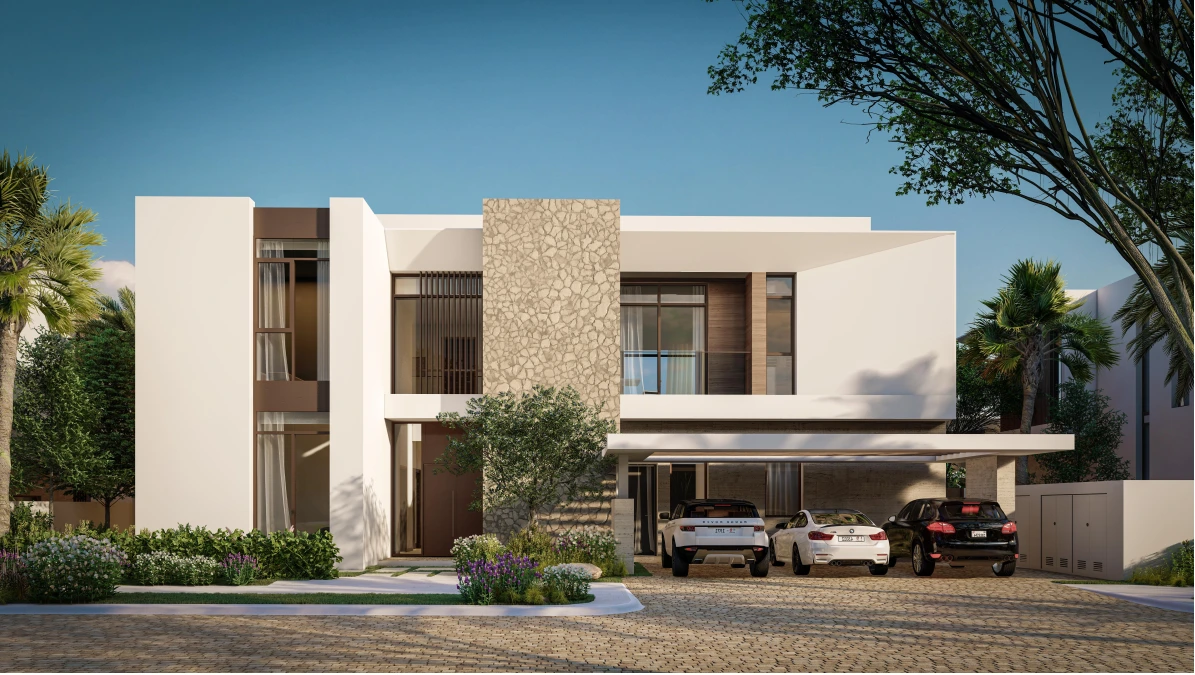
Context
The project is a large residential villa development at Al Jurf Gardens. The 174 villas are distributed across 10 villa typologies, allowing the BIM production strategy to focus on developing the unique types and then applying them across the repeated villa population.
My contribution
This was my first project at Al Firas and my scope was centered on BIM production and quantity extraction.
01 · Villa BIM modeling
Developed the BIM models for the project villa typologies, focusing on the unique types rather than remodelling repeated villas individually.
02 · 10-type production logic
Worked across the 10 villa types used to populate the 174-villa development.
03 · Model-based quantities
Used the developed BIM models to extract construction quantities directly from the model data.
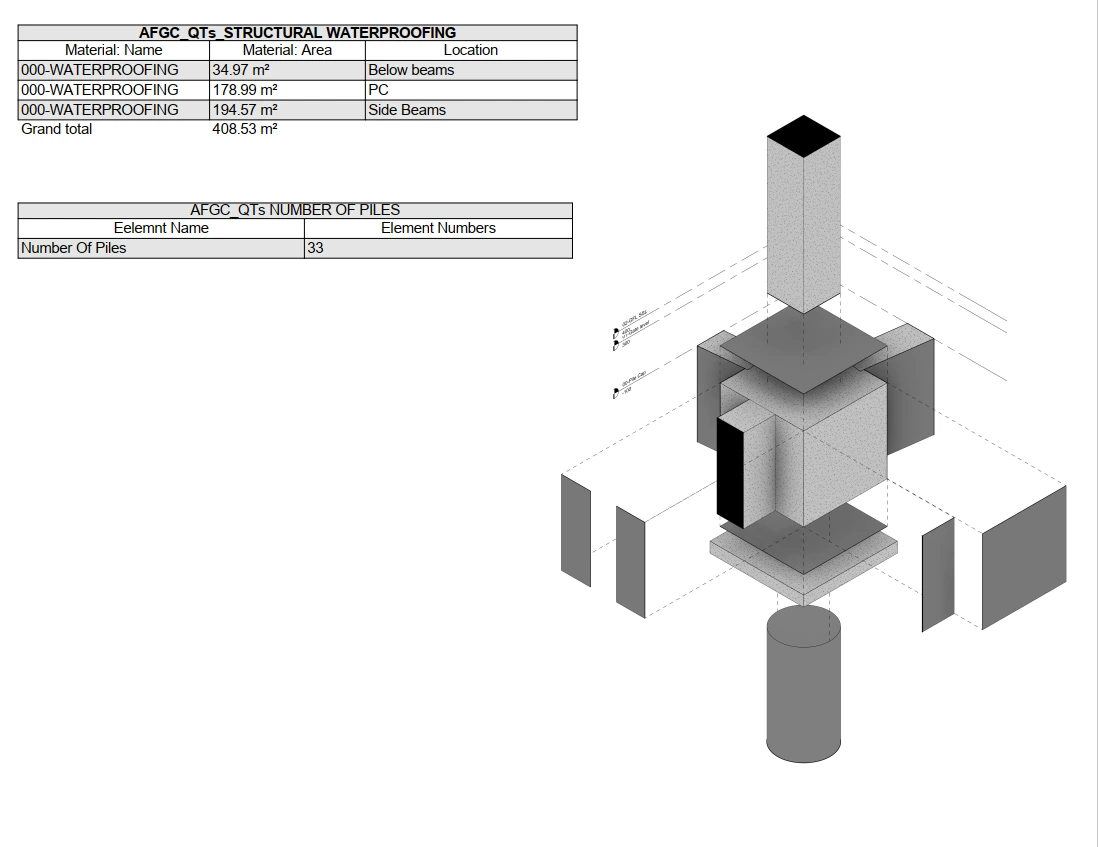
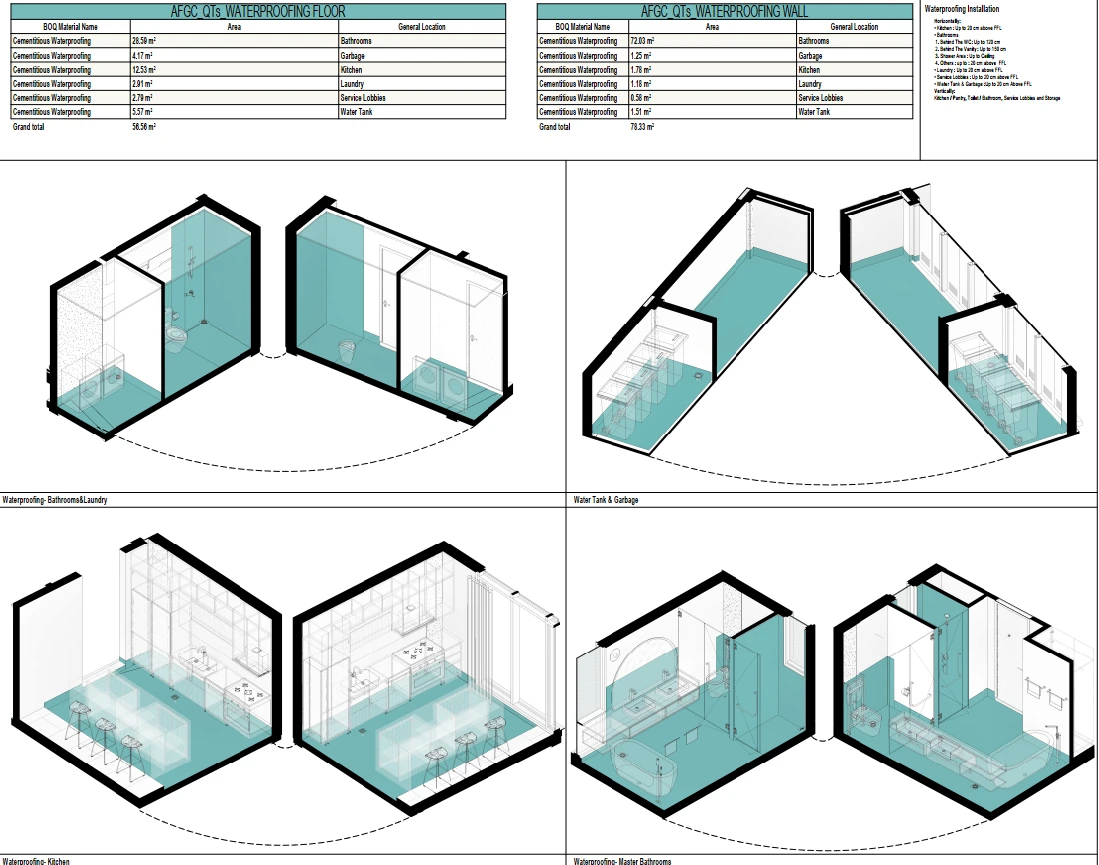
04 · Waterproofing take-off
Produced quantity outputs for waterproofing scopes including roof, balconies, exterior and interior wet areas.
Process
The workflow was simple and production-focused: understand the typology, build the model correctly, then turn the BIM data into measurable construction quantities.
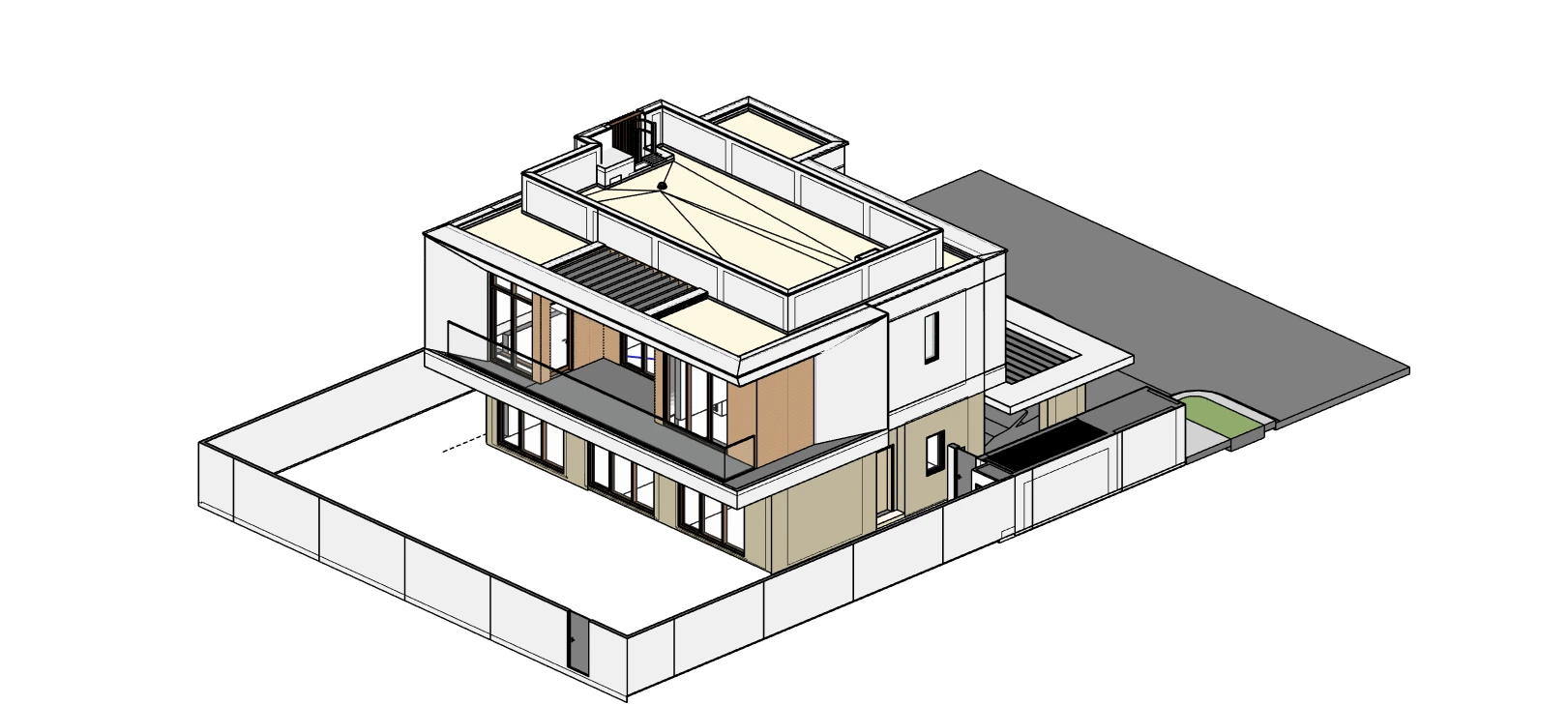
Modeling
The modeling scope covered the 10 unique villa types used across the 174 villas. Using the Rawya 5A sample BUA of 516.76 m² as an indicative benchmark, 10 equivalent typologies represent approximately 5,167.6 m² of unique-type modeling. This is an indicative scale only because the actual villa types vary in area.
Quantities
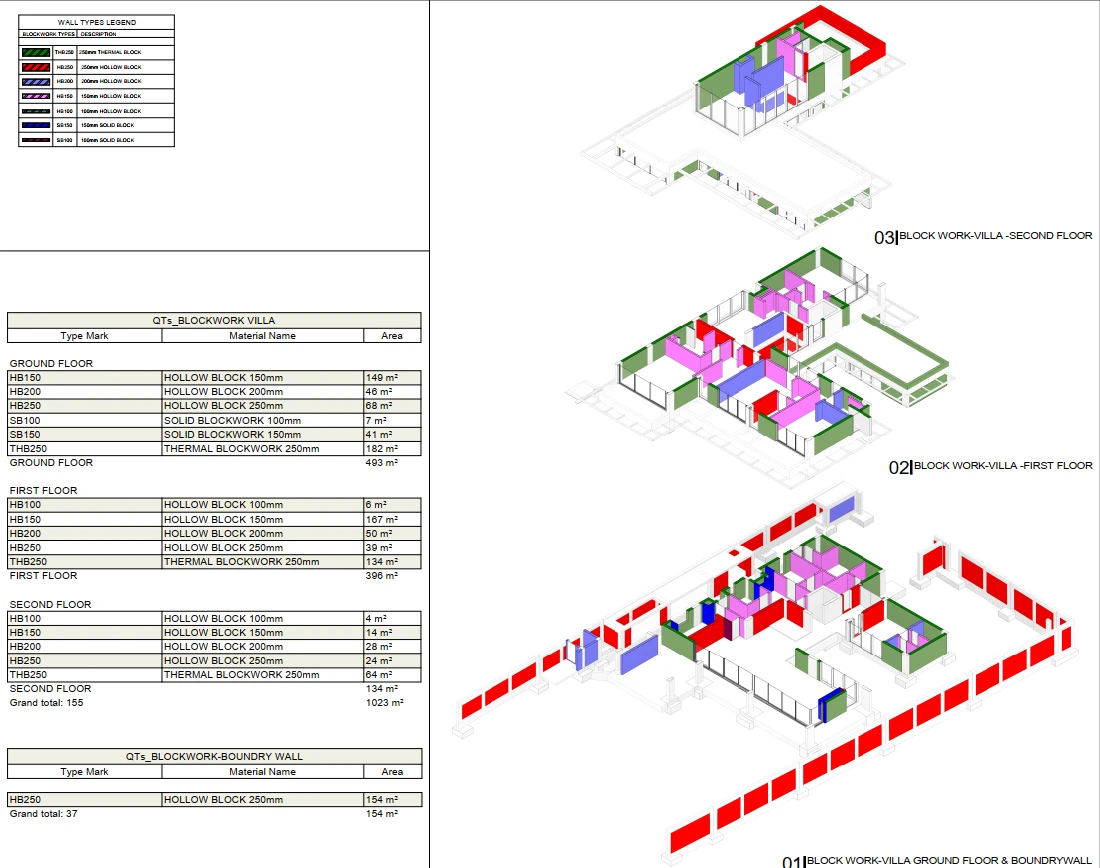
Once the villa models were developed, I used them as a source for construction quantity take-offs. The samples below show different model-based quantity outputs produced from the workflow, including structural waterproofing, interior waterproofing and blockwork quantities.
Output
The project produced a compact but practical BIM production workflow.
10 villa-type BIM models
Unique typology models forming the production base for the 174-villa development.
Model-based quantity schedules
Construction quantity outputs generated directly from the BIM model data.
Waterproofing and blockwork take-offs
Representative outputs included structural waterproofing, interior waterproofing and blockwork quantity sheets.
Result
The project gave me a direct construction-BIM workflow from typology modeling to quantity take-off: 10 unique villa types supporting a 174-villa development, with model data used as a measurable source for construction quantities.
Repeatable typology logic
Ten unique models supported a much larger population of repeated villas.
Model-to-quantity workflow
The model was used as a measurable construction database rather than only a 3D deliverable.
Construction-focused outputs
Quantities were linked to practical scopes such as waterproofing and blockwork.
First Al Firas project
The project established my early contractor-side BIM production workflow at Al Firas.